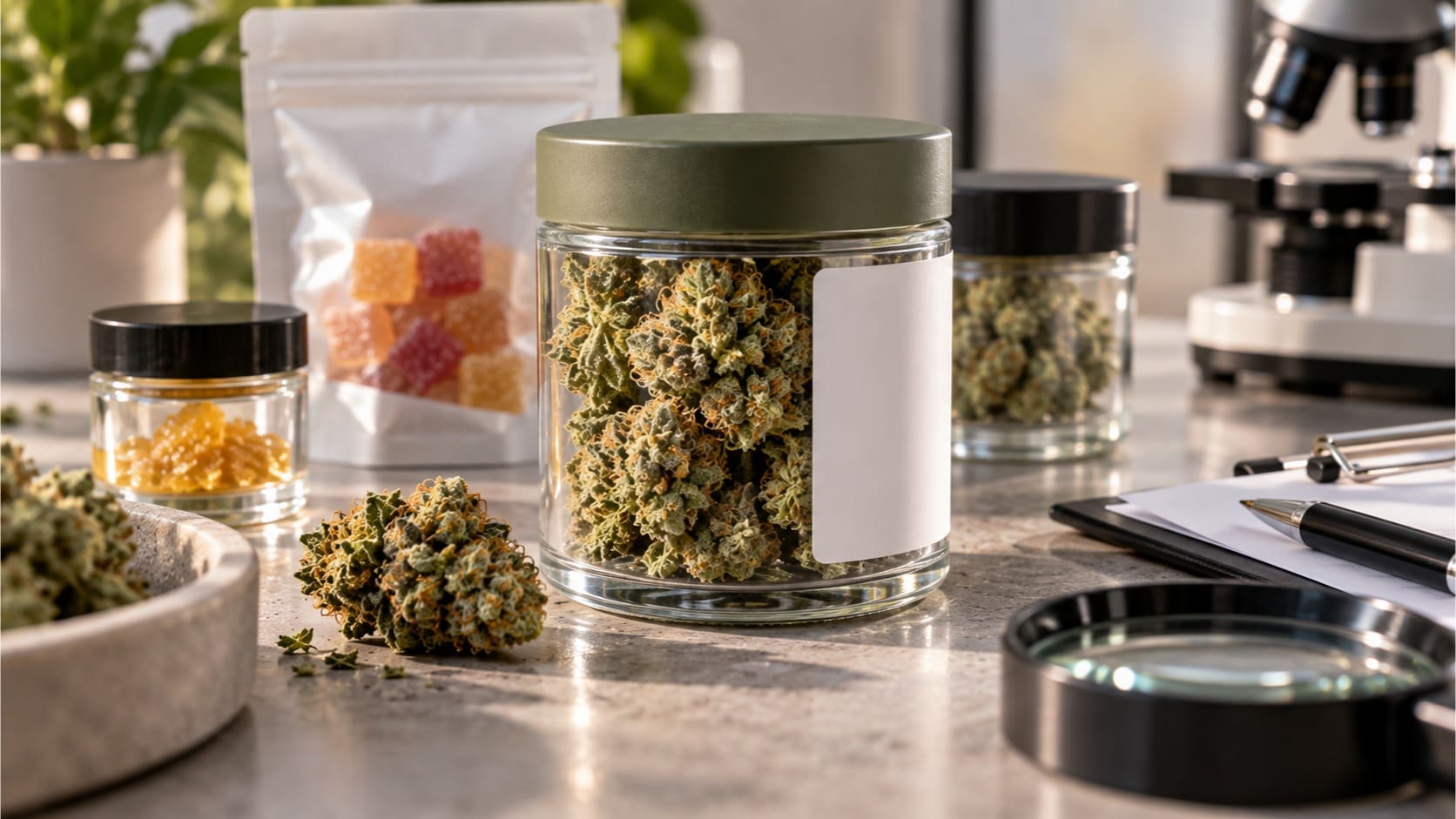
A Colorado cannabis product label shows THC and CBD content (either as a percentage for flower or milligrams per serving for edibles and concentrates), a batch or lot number tied to lab testing results, a universal cannabis symbol required by state law, and standard warning statements, and understanding each of these makes it much easier to compare products and dose accurately. Once you know what you’re actually looking at, a label that seemed like a wall of numbers becomes genuinely useful information.
Why Colorado Requires Standardized Labels
Every product sold at a licensed Colorado dispensary goes through mandatory lab testing and must display specific information by law. This isn’t optional branding, it’s a consumer protection requirement designed so you know exactly what you’re buying and at what strength, regardless of which dispensary or brand you’re shopping. The same standardized rules apply whether you’re buying flower, an edible, a concentrate, or a topical, which makes it possible to compare products across different brands using the same baseline information.
THC and CBD Content
For flower, potency is usually shown as a percentage, representing how much of the product’s weight is THC or CBD. A flower product labeled around 20 percent THC, for example, has a meaningfully different effect profile than one labeled around 12 percent, even though both might look similar on the shelf. For edibles, tinctures, and concentrates, potency is shown in milligrams, either per serving or per package, which matters more for dosing than percentage alone. A product might have a high percentage but a small serving size, or a moderate percentage with a much larger effective dose per unit, so it’s worth checking both numbers rather than potency alone, especially when comparing an edible to a concentrate, where the numbers mean very different things.
The Universal Cannabis Symbol
Colorado requires every legal cannabis product to display a standardized triangle warning symbol with “THC” printed inside it. This is required specifically so cannabis products are distinguishable at a glance from regular food or drink, particularly important for edibles that might otherwise resemble a normal snack, chocolate, or gummy. If you ever see a cannabis product without this symbol, that’s a red flag worth asking a budtender about, since it’s a required element on every legally sold product in the state.
Batch and Lot Numbers
Every product is tied to a specific batch number, which connects it to the lab test results for that exact production run. This matters because potency and quality can vary slightly from batch to batch even for the same named product, a batch number lets you or a budtender pull up the exact test results for the specific unit in your hand rather than relying on general product marketing. If you ever want to see detailed testing data for a specific product, a budtender can usually pull up the batch’s full test results, covering potency, pesticides, heavy metals, and microbial testing.
Serving Size and Total Package Amount
Edibles in Colorado are limited to 10 milligrams of THC per serving and 100 milligrams total per package, and the label will show both numbers clearly. This is one of the most important numbers to check before eating an edible, since it’s easy to assume an entire package is a single serving when it’s actually several, a common mistake among first time edible users that leads to taking a much larger dose than intended. Always check whether the labeled serving size refers to the whole product or a specific piece, like a single gummy out of a multi piece package.
Warning Statements
Standard warnings around impairment, keeping products away from children, and not driving or operating machinery are required on every label. These aren’t unique to any one brand, they’re a state mandated baseline across all legal cannabis products, whether it’s a jar of flower, a vape cartridge, or a chocolate bar.
Reading Labels for Different Product Categories
Concentrates, like live rosin, live resin, and bubble hash, are labeled by percentage similar to flower, but tend to run considerably higher, sometimes 60 to 90 percent or more, which is part of why they’re intended for smaller amounts per use than flower. Cartridges are typically labeled by total milligrams in the cartridge along with a percentage. CBD dominant products, including high CBD flower, edibles, and topicals, will show both THC and CBD content separately, and it’s worth checking the ratio between the two rather than just the total cannabinoid content, since a 20:1 CBD to THC edible behaves very differently than a product with a more even ratio.
Putting It All Together
When you’re comparing two products side by side, checking milligrams per serving rather than percentage alone, confirming the batch has current lab results, and reading the total package amount will tell you far more than glancing at the price tag. A budtender can walk you through any label in person, and for products like THCA flower or a delta-8, delta-9, or THCA product, the labeling differences matter even more since these compounds test and label differently from standard THC, and knowing which compound is actually listed on the label changes what to expect from the product.
If you’re newer to reading labels in general, our guide on what “start low and go slow” means ties directly into label literacy, since the whole point of understanding a label is knowing how to dose appropriately from the start. If you have specific questions about testing or compliance, our FAQ page covers common questions, and you can browse our menu to see labeled potency on current products before you even walk in.
What to Do If a Label Seems Inconsistent With What You Expected
Occasionally a product might feel stronger or weaker than its label suggests, individual tolerance and body chemistry play a real role here, so this doesn’t automatically mean the label is wrong. That said, if you have a genuine concern about a specific product’s labeling or testing, a budtender can pull up the batch specific lab results for comparison, and licensed dispensaries are required to make this information available. This is one of the real advantages of buying from a licensed retailer rather than an unregulated source, every product has a documented paper trail back to its lab results.
How Labeling Requirements Differ for Medical vs Recreational Products
Labeling requirements are largely the same for medical and recreational products in Colorado, both are required to display the same core information, THC and CBD content, batch numbers, the universal symbol, and warning statements. Where things can differ slightly is potency, since some higher potency products are only available to medical cardholders, meaning a recreational shopper might not see certain high percentage labels on the shelf at all, not because the labeling is different, but because the product itself is restricted to medical sales only.
Why Understanding Labels Matters More for New Products
If you’re trying a new product category for the first time, a concentrate after primarily buying flower, or an edible after primarily using a vape, label literacy becomes especially important, since potency conventions differ significantly between categories. A percentage that would be considered high for flower is actually low for a concentrate, and a milligram count that’s standard for an edible would be an enormous single dose if it referred to a concentrate instead. Cross referencing category norms with a budtender before trying something new helps avoid the confusion that comes from applying one category’s expectations to another.
A Quick Checklist for Your Next Purchase
Before buying, it’s worth glancing at four things on any label: the milligrams or percentage of THC and CBD, the batch number and whether current test results are available, the total package amount versus the per serving amount, and the required warning statements confirming the product is compliant. Making this a habit takes only a few extra seconds per purchase and meaningfully reduces the odds of an unexpectedly strong or unexpectedly weak experience.
Frequently Asked Questions
What does the percentage on a flower label actually mean?
It represents what portion of the product’s total weight is THC or CBD, higher percentages generally mean a stronger effect per gram.
Why do edibles show milligrams instead of a percentage?
Milligrams give a precise dose per serving, which matters more for edibles than an overall percentage, since serving size varies by product.
What is a batch or lot number used for?
It ties a specific product to its exact lab test results, covering potency and safety testing like pesticides and heavy metals.
How much THC can be in a single edible package in Colorado?
Colorado caps edibles at 10 milligrams of THC per serving and 100 milligrams total per package.
Why do concentrates have such a higher percentage than flower?
Concentrates are processed to isolate and concentrate cannabinoids, which naturally results in a much higher percentage than raw flower, this is expected and why concentrates are used in smaller amounts.
How do I check the ratio on a CBD dominant product?
The label will list THC and CBD content separately, look at both numbers together rather than just the total to understand the actual ratio, like 20:1 CBD to THC.

About the Author: Dylan Donaldson
Dylan is a Colorado native that graduated CU Boulder in 2007 with a degree in Business Communication. Having run a variety of his own businesses while attending college, Dylan found his passion in plants and people.
See more about the author