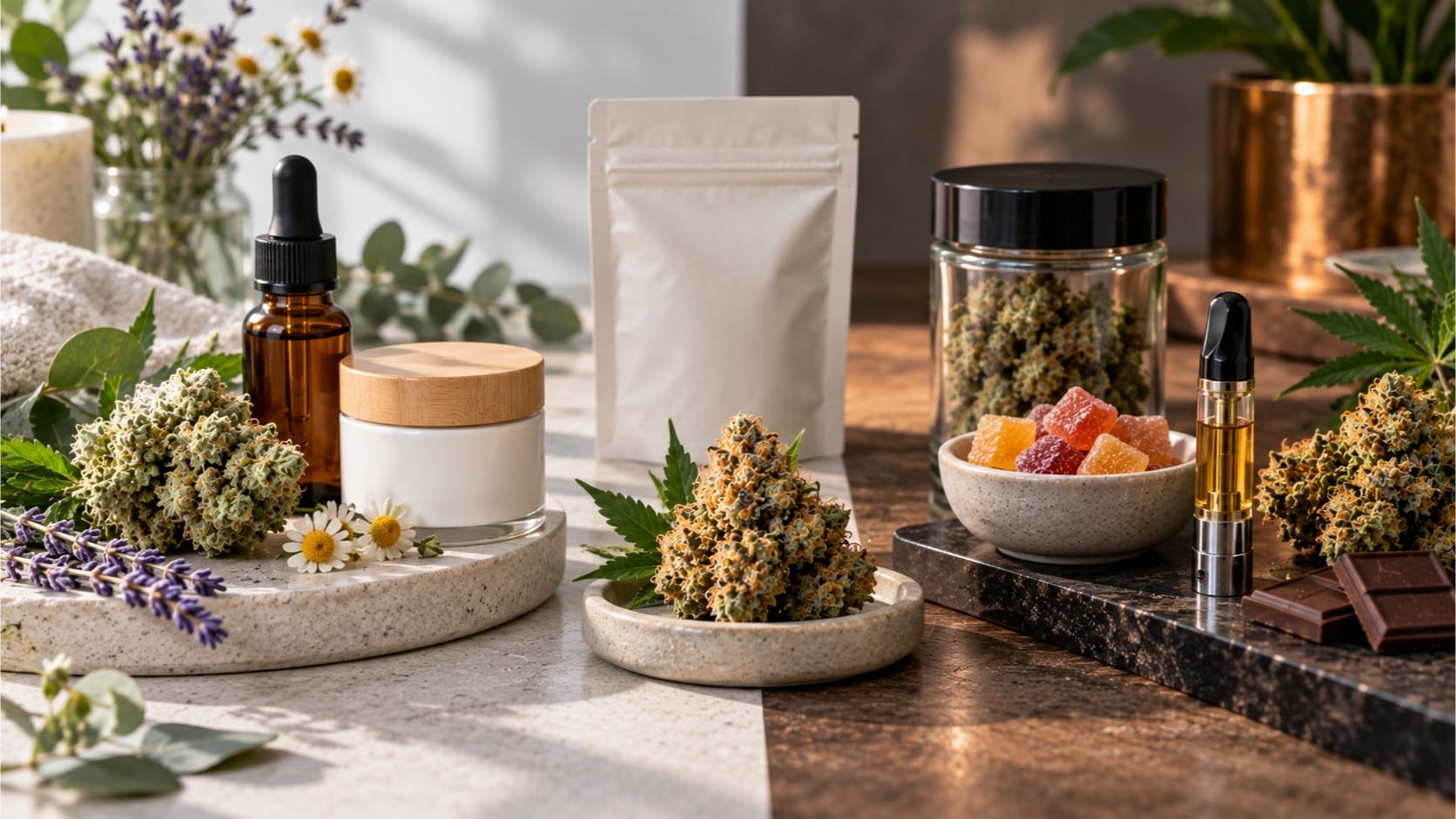
THC is the cannabinoid responsible for the psychoactive “high” associated with cannabis, while CBD does not produce a high and is more commonly used for its calming, anti inflammatory, and relaxing properties, and many products combine both in different ratios depending on the effect you’re after. Understanding this one distinction clears up most of the confusion people have when they first start looking at a dispensary menu.
They Come From the Same Plant, But Act Differently
THC and CBD are both cannabinoids found in the cannabis plant, but they interact with the body’s endocannabinoid system in different ways. THC binds directly to receptors in the brain in a way that produces intoxicating effects. CBD interacts with the same system more indirectly and doesn’t produce that same high, which is why a CBD dominant product can be used throughout the day without impairment. This is the core reason the two get treated so differently on a dispensary menu, and why some products lean entirely toward one or the other while others blend them intentionally.
What THC Is Typically Used For
THC is the cannabinoid most associated with the classic effects people expect from cannabis, euphoria, relaxation, altered perception, and increased appetite. It’s the primary active compound in most flower, vapes, and traditional edibles found on a dispensary menu. THC content is what’s typically referenced when a strain or product is described by potency, a higher THC percentage generally means a stronger intoxicating effect.
What CBD Is Typically Used For
CBD is more commonly reached for by people looking for relief from anxiety, inflammation, or general tension without an intoxicating effect. It’s popular among people who want cannabis’s calming properties but still need to drive, work, or go about a normal day afterward. At Karing Kind, our CBD product line includes clean grown 1:1 THC/CBD flower, edibles up to a 20:1 CBD to THC ratio, microdose sublinguals, and soothing topicals, covering a wide range of ways to access CBD depending on how you prefer to consume it.
Ratio Products: The Best of Both
A lot of products aren’t purely one or the other, they’re blended in specific THC to CBD ratios, like 1:1 or 2:1, designed to soften THC’s intensity while still providing some psychoactive effect, or to add a mild lift to a primarily CBD focused product. Our own 20:1 CBD to THC edibles are a good example of a heavily CBD leaning ratio product, offering a very mild, mostly non intoxicating experience. These ratio products are often a good starting point for people who want some effect from THC without the full intensity of a THC dominant product, or who want a touch more effect from a CBD dominant product than pure CBD alone provides.
How to Decide Which Fits You
If your goal is relaxation without impairment, daytime use, or you’re sensitive to THC’s effects, a CBD dominant or high CBD ratio product is usually the better starting point. If you’re looking for a stronger, more classic cannabis effect and don’t mind some intoxication, a THC dominant product fits better. A lot of people end up using both, CBD during the day, THC in the evening, depending on what they need at that moment. It’s also common to use both within the same product category, our 1:1 flower is a good example of getting both cannabinoids in a single, balanced product rather than choosing one over the other entirely.
A Note on Legal Status
Hemp derived CBD (under 0.3% THC) is federally legal and widely available outside of licensed dispensaries, at grocery stores, gas stations, and general retail shops, while cannabis derived CBD sold at a dispensary typically comes with a fuller cannabinoid and terpene profile and is regulated under Colorado’s cannabis program specifically. That’s part of why dispensary CBD products can differ meaningfully in quality, testing rigor, and effect from what you might find at a general retail store, since dispensary products go through the same mandatory lab testing as every other cannabis product sold under state regulation.
Common Myths Worth Clearing Up
A common misconception is that CBD is simply a “weaker” version of THC, when in reality they’re different compounds with different effects entirely, CBD isn’t a milder high, it’s generally not intoxicating at all. Another common myth is that CBD cancels out THC entirely when combined, in reality CBD can moderate some of THC’s intensity in certain ratios, but it doesn’t eliminate the psychoactive effect outright, which is why even our more CBD leaning ratio products still carry a THC warning label.
How Onset and Duration Differ Between CBD and THC
THC’s psychoactive effects are generally what people are most familiar with in terms of timing, inhaled THC takes effect within minutes, while ingested THC can take 30 to 90 minutes and lasts considerably longer. CBD’s effects tend to be more subtle and harder to notice in the moment, since there’s no intoxicating marker to signal when it’s “working” the way a high does with THC. This is worth knowing going in, since a first time CBD user might expect a clear, noticeable shift and instead experience something more gradual, a general sense of calm or reduced tension rather than an obvious change in perception.
Building Tolerance and Adjusting Over Time
Regular THC users often notice their tolerance shifting over time, needing a somewhat higher amount to achieve the same effect they once got from a smaller dose. CBD tolerance works differently and less predictably, some people report needing to adjust their CBD dose upward over time, while others find a consistent dose continues working the same way indefinitely. If you’re using either compound regularly, it’s worth periodically reassessing whether your current product and dose are still serving you well, rather than assuming what worked initially will always be the right fit.
Talking to a Budtender About Specific Goals
Because CBD’s effects are more subtle and harder to self assess than THC’s, it’s especially useful to be specific with a budtender about what you’re hoping to get out of a CBD product, general relaxation, help with occasional tension, or support fitting into a broader wellness routine. That specificity helps a budtender narrow down which of our CBD dominant or ratio products, from flower to edibles to topicals, is the best starting point for your particular goal, rather than picking based on CBD content alone.
Choosing Between Product Types Within Each Category
Once you’ve decided whether you’re leaning CBD, THC, or a blended ratio, the next decision is format, flower, edibles, a tincture, or a topical, each of which delivers the cannabinoid differently in terms of onset time and duration. Our guide on choosing between flower, edibles, vapes, and concentrates walks through those tradeoffs in more depth, and applies whether you’re shopping the THC side of the menu or the CBD side.
Where to Start
If you’re not sure where to begin, a budtender can walk you through current CBD, THC, and ratio product options based on what you’re actually trying to get out of it. Browse what’s currently in stock on our menu, and if you’re curious about other cannabinoids beyond CBD and THC, our post on THCA flower and our breakdown of delta-8, delta-9, and THCA go deeper into that, since the cannabinoid landscape extends well beyond just these two.
Frequently Asked Questions
Does CBD get you high?
No, CBD does not produce the intoxicating effect associated with THC, which is why it can be used without impairment.
What is a 1:1 THC to CBD ratio product?
It’s a product with roughly equal parts THC and CBD, designed to soften THC’s intensity while still offering a mild effect from each.
Can I use CBD and THC products together?
Yes, many people use CBD during the day for calm without impairment and THC in the evening for a stronger effect, depending on what they need.
Is dispensary CBD different from CBD sold at other stores?
Often, yes. Dispensary CBD is typically cannabis derived with a fuller cannabinoid and terpene profile, while store bought CBD is usually hemp derived with under 0.3% THC.
Does CBD cancel out the effects of THC?
Not entirely. CBD can moderate some of THC’s intensity in certain ratios, but it doesn’t eliminate the psychoactive effect outright.
What CBD products does Karing Kind carry?
Our CBD line includes 1:1 THC/CBD flower, edibles up to a 20:1 CBD to THC ratio, microdose sublinguals, and topicals.

About the Author: Dylan Donaldson
Dylan is a Colorado native that graduated CU Boulder in 2007 with a degree in Business Communication. Having run a variety of his own businesses while attending college, Dylan found his passion in plants and people.
See more about the author